
Apart from the human body, human food will bear direct repercussions. From staples such as wheat, to coffee, dairy, and even the great Hilsa face the threat of reduced supply due to the extreme heat.

Adani Wilmar (AWL) joined the elite group of companies with market capitalisation (m-cap) of Rs 1 trillion after the stock of Gautam Adani-led edible oil company hit a new high of Rs 802.80, up 5 per cent on the BSE in Tuesday's trade.
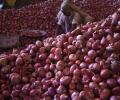
Onion prices are likely to start shooting up in the retail market towards the end of August before going up further to around Rs 60-70 per kg next month due to tightened supplies, a report said on Friday. However, the prices will remain below the highs of 2020, it said. "The supply-demand imbalance is expected to reflect in onion prices towards end-August. "As per our ground interactions, prices are expected to show significant increase from early September in the retail market, reaching up to Rs 60-70 per kg during the lean patch.

'At this moment, investors should look for relative value within sectors and clear visibility (third-wave-or-not) on earnings delivery.'

Today's top mobile phone makers Samsung and Apple don't feature in the top 15.

Reserve Bank of India (RBI) Governor Shaktikanta Das had stumped the market in the previous two policies - in August and in October - first with action and then with words. In August, it was the introduction of an incremental cash reserve ratio (I-CRR) to take out excess liquidity, which took the markets by surprise. In October, there was no action. Rather, what is known as "open mouth operation", Das' comment that the central bank might conduct open market operations (OMOs) by selling bonds tempered the euphoria in the bond markets after JP Morgan's inclusion of India in its Emerging Market Bond Index.
Delhi-based market research consultancy Market Pulse spoke with close to 350 consumers in Delhi, Mumbai and Chennai to understand their attitudes to modern retail and their spending patterns.

Analysts are divided on their retail price inflation forecast, with some saying the first quarter numbers will overshoot the RBI target by as much as 60 bps while others are softer in their estimate. Consumer price inflation retreated from its 15-month peak of 7.4 per cent in July to 6.8 per cent in August, much lower than the market expectations, despite vegetable prices remaining elevated at 26.1 per cent. Food inflation eased to 9.9 per cent from 11.5 per cent, led by some cooling of inflation in vegetables, cereals, pulses and milk.

In the months to come, the skies above promise to be a captivating theatre of action, where helicopters play starring roles, ferrying leaders, and echoing the pulse of democracy.

IT, FMCG and manufacturing sectors are less attractive to foreign portfolio investors

Snapping its declining trend, retail inflation rose to a three-month high of 5.55 per cent in November on firming food prices, including vegetables and cereals, though it remains within the RBI's comfort zone of less than 6 per cent. Inflation based on the Consumer Price Index (CPI) was 4.87 per cent in October and 5.88 per cent in November 2022, the government data released on Tuesday showed. The previous high was 6.83 per cent in August and inflation had been on a decline since then.

Seven years after it announced Nexa, there's no mistaking the seriousness with which Maruti wants the segment to grow, says Pavan Lall.

The government's annual Economic Survey on Friday strongly defended new farm laws, saying they herald a new era of market freedom which can go a long way in improving lives of small and marginal farmers in India. These legislations were designed "primarily" for the benefit of "small and marginal farmers", which constitute around 85 per cent of the total number of farmers and are the biggest sufferer of the "regressive" APMC-regulated market regime, the survey said. The pre-budget document defended the farm laws in the backdrop of long-running farmers' agitation at various borders of the national capital seeking repeal of these legislations expressing concern that they are pro-corporate and could weaken government regulated mandis, also called Agriculture Produce Marketing Committees (APMCs).

Renewed inflationary pressures, led by a spike in prices of vegetables and cereals, have cast a spell on the equity markets in the past month. The BSE Sensex and Nifty50 have declined up to 2 per cent each during the period, clipping the 13 per cent rally from the March lows, shows data from ACE Equity. Investors typically consider shares of fast-moving consumer goods (FMCG) companies as defensive bets, putting their weight behind them in a falling market.

Finance Minister Nirmala Sitharaman on Thursday said the government is close to reaching saturation in implementing social sector schemes designed to provide basic necessities to the poor. Addressing the students of Hindu College on the occasion of its 125th anniversary, she said the time has come for India to become economically 'aatmanirbhar' (self-reliant) and march forward to becoming a developed nation by 2047. Regretting that 60 years since Independence passed without any sense of urgency, Sitharaman said, "We have laid the material foundation for a Viksit Bharat" and empowering people by providing basic necessities to all.

Over the past year, Amul has undergone a transformative journey, evolving from a dairy-centric entity to a comprehensive foods company. Since 2022, PepsiCo India, too, has embarked on extensive launches in the food category. Not to be left behind, ITC, which has been introducing an average of 100 fast-moving consumer goods (FMCG) products across categories every year, has also launched a number of packaged food items.

Deteriorating ties between India and Canada could have a bearing on flows into the domestic capital markets. At present, Canada is the seventh largest country for foreign portfolio investor (FPI) flows into India. According to the National Securities Depository Ltd (NSDL), the assets under custody (AUC) of FPIs domiciled in Canada stood at nearly Rs 1.8 trillion ($21 billion) at the end of August. Almost 85 per cent of these investments are in listed equity, while the remaining in debt and hybrid instruments.
Indian growth in the rest of this fiscal year and next will be propelled by robust domestic consumption as consumer confidence improves, and by investment, including large increases in government capital expenditure, according to the Asian Development Outlook September 2023. "As slowing exports could foment headwinds for the economy, and erratic rainfall patterns are likely to undermine agricultural output, the growth forecast for FY2023 is revised down marginally to 6.3 per cent," ADB said.

Retail inflation rose to three-month high of 4.81 per cent in June, mainly on account of hardening prices of food, according to the government data. Inflation based on the Consumer Price Index (CPI) stood at 4.31 per per (revised upward from 4.25 per cent) in May and 7 per cent in June 2022. The inflation, however, remains within the RBI's comfort level of below 6 per cent.

Fearing likely shortage, the government on Thursday said it has made an advance plan to import about 10 lakh tonne higher quality of tur dal via private trade this year to meet the domestic requirement. The issue was discussed in a high-level meeting called by the cabinet secretary to review the prices of essential commodities, especially pulses and onions. Tur production is pegged lower at 3.89 million tonne in the 2022-23 crop year (July-June) from 4.34 million tonne in the previous year as per the initial projection made by the agriculture ministry. Tur is a kharif crop.

While India won't be immune to global spillovers, we need to create the macro preconditions for sustained growth. Policy agility, prudence, and resilience will be key, suggests Sonal Varma.
Retail inflation jumped to a 15-month high of 7.44 per cent in July as prices of vegetables and other food items spiked, according to official data released on Monday. The Consumer Price Index (CPI) based inflation was at 4.87 in June and 6.71 per cent in July 2022. Previously, high inflation was recorded at 7.79 per cent in April 2022.

Only 10 per cent of stocks account for 93 per cent of investments.

We are surrounded by food that is contaminated, adulterated and does not meet Indian safety and packaging standards, says Abheet Singh Sethi/IndiaSpend.com.

Usually, turmeric is grown over 290,000-330,000 hectares of land. But in 2022-2023, according to official estimates, there has been a drop of about 10,000 hectares.

Existing optimism about the capital goods sector has been enhanced by the Assembly election results, which were favourable for the BJP. The prospects of political continuity led to renewed interest in the sector. There are demand-supply gaps, especially in power, and visibility of improved pricing and strong order flows, including from private enterprises.
All principal markets in Mumbai including, the Bombay Stock Exchange, the National Stock Exchange, Foreign Exchange, money market, bullion, oils and oilseeds, grains, pulses

The first to see price hikes will be soaps. In the past six months, domestic palm oil prices have increased by 46 per cent. Palm oil is a key input going into soaps.

Chief Economic Advisor V Anantha Nageswaran on Thursday said the economy is expected to grow at 6.5 per cent in the current fiscal notwithstanding deficient rains in August. India recorded economic growth of 7.8 per cent in the April-June quarter of 2023-24 against 13.1 per cent in the year-ago period. India's economy in Q1 grew at the fastest pace in a year, on the shoulders of a boost in capital expenditure both at central and state levels, along with stronger consumption demand, especially in rural areas, and improved performance in the services sector, he said.
Improved monsoon, solid fiscal performance, and capex push by the public and private sectors augurs well for India's macroeconomic stability and growth, the finance ministry's monthly economic review for June 2023 said. But the report said that while India's domestic fundamentals remain strong, negative cross-border spillovers and adverse global developments could act as a deterrent in achieving the high growth path this financial year. "An improved matching of aggregate supply and aggregate demand in the Indian economy underpins the progress made in the control of domestic inflation and the consequent strengthening of macroeconomic stability," the review said.
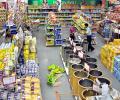
Jiomart B2B is the latest among organised supply-chain companies to bite the bullet, shutting down its warehouses, and asking its employees to leave. Why are companies finding it difficult to sustain the supply-chain business? Experts point out that gross margins in supplying fast-moving consumer goods (FMCGs) are very low.

Gross value added in agriculture and allied activities clocked a healthy growth rate of 4.5 per cent at constant prices in the second quarter of FY22, up from 3 per cent during the same period last fiscal year and 3.5 per cent in Q2 of 2019-20. In the first quarter of FY22, gross value added in the sector was also 4.5 per cent. Growth in current prices was also a healthy 7.9 per cent in July-September 2021-22, up from 7.3 per cent in the same quarter last fiscal year. It was slightly less than the 8.7 per cent of the second quarter of 2019-20.

'People now recognise rapping as a profession.' 'We are able to tell our relatives that we rap for a living.'

As India looks to mend its Covid-battered economy, one thing that will grab the attention of all concerned is the path that both wholesale and retail inflation will follow. Even the Reserve Bank of India in its latest policy statement said, "Going forward, the inflation trajectory is likely to be shaped by uncertainties impinging on the upside and the downside.

Unprecedented rains and floods in the northern region in the past few days have not only caused extensive damage to lives and property but have also impacted business and commercial establishments. Vegetable prices have gone through the roof in the national capital and many other parts of the country since rains started pouring earlier this month. Traders say vegetable prices would come down only after roads open and skies clear, even as water in the fields will take time to recede.

Bond markets, global as well as domestic, are likely headed towards hard times over the next three to six months, as higher vegetable prices, rising fuel costs, and improved wages may keep inflation hot, believe analysts, who expect the yields to hit 7.5 per cent in the near-term from the current 7.234 per cent. In this backdrop, they suggest investors can put in money in funds/instruments with residual maturity of 4 to 6 years, while longer-term investors can allocate cautiously to the longer end in the range beyond 7 years.
The stock market boom would continue in 2006 on the back of strong macro-economic fundamentals, an apex industry chamber said on Friday.

UPL, the country's largest agrochemical company, had a weak July-September quarter (Q2), reporting a sharp fall in revenues across geographies. Overall, the revenues were down 19 per cent on the back of lower agrochemical prices and inventory destocking. While the overall volumes were down 7 per cent, prices fell by 15 per cent. Volume decline in the European market was on the back of high channel inventory and product bans while in India the fall by 27 per cent was on account of muted demand for segments such as cotton and pulses.
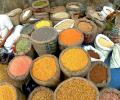
Prices of food items like cereals, pulses, and edible oils rose or remained steady in May, a Reserve Bank of India (RBI) report said, indicating there could be another higher inflation print. However, it observed that the Monetary Policy Committee's (MPC's) surprise move to increase interest rates bodes well for its credibility. The RBI's monthly State of the Economy report, released on Tuesday, citing high frequency food price data from the Ministry of Consumer Affairs for the period May 1-12, said the increase in the prices of cereals was primarily because of the surge in wheat prices.

'There are occasions when the prices of individual items like food raise inflation; then supply-side measures must be taken.' 'But if there is continued inflation, it means liquidity is aggravating the situation.'
